


This blog is a roundup of all the sessions from the Fair Seas World Ocean Week Conference 2026 which took place on June 3rd 2026 in Cork City Hall Ireland.
The aim of the conference was to once again bring ocean advocates, the fishing community, government, industry and key stakeholders together to map out Ireland’s next steps for designating and managing a network of Marine Protected Areas (MPAs). The agenda was filled with community members from across Ireland and speakers to help us learn from best practices from across the world. The overarching objective of gathering together was to allow people the chance to be part of the conversation and develop an understanding of how Ireland can become a world leader in ocean conservation.
A full recording of the conference is available on YouTube.
Marine Protection and Restoration: A Global Perspective (Session 1)
The aim of this session was to focus on learning from global leadership to transform global ambition into Irish action. This opening session set the stage for a day focused on one pressing question: how can Ireland translate international ambition for ocean protection into meaningful action at home? The conference was expertly MC’d for a second year by Susan Hayes-Culleton
Following welcomes from Cork Lord Mayor, Cllr. Fergal Dennehy and Fair Seas Campaign Coordinator Dr Dónal Griffin, delegates heard from Minna Epps, Global Ocean Policy Director with the IUCN Centre for Policy and Law. Her keynote highlighted the growing international momentum behind marine conservation and the importance of delivering effective protection for marine ecosystems.
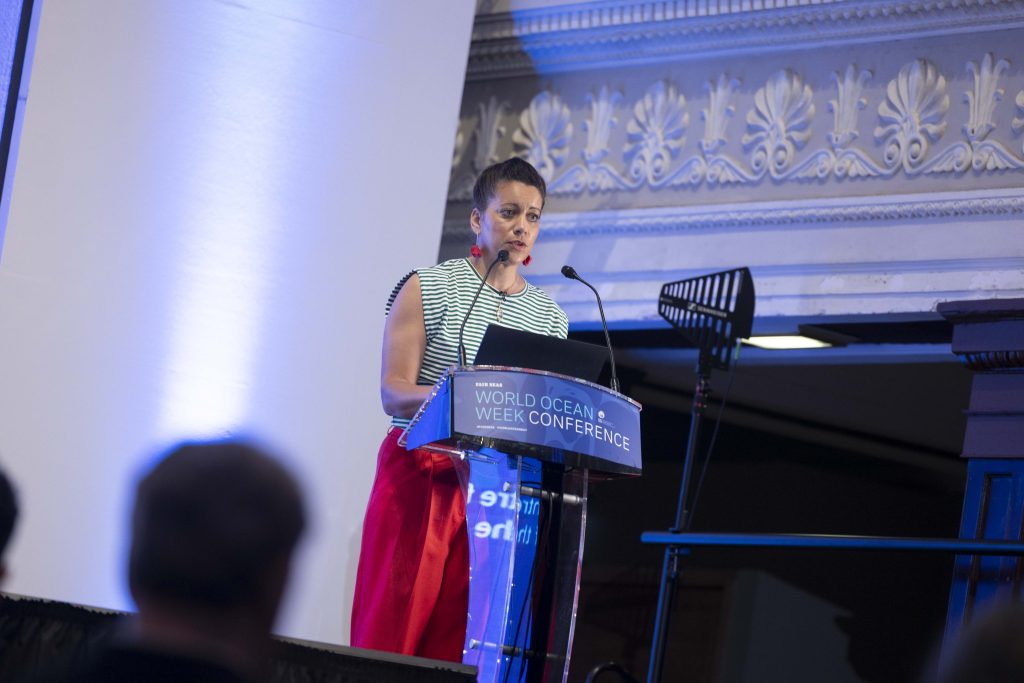
Epps emphasised that the global commitment to protect at least 30% of land and sea by 2030 must be accompanied by strong governance, adequate resources, and clear conservation outcomes. Simply designating protected areas is not enough. “Designation without management is just an aspiration, it’s not protection” and “legal protection creates the possibility, implementation creates protection”, were some of the realities Epps made extremely clear.
Success of ocean conservation and restoration depends on ensuring that marine ecosystems can recover and thrive.
This message is particularly relevant for Ireland as the Government develops its Marine Protected Areas network. While Ireland has committed to protecting 30% of its marine area by 2030, the real measure of success will be whether those areas are effectively managed and contribute to biodiversity recovery.
The session was strengthened further by very relevant contributions from Minister Timmy Dooley and An Taoiseach Micheál Martin, whose participation reflected the growing recognition that Ireland’s ocean is central to our environmental, economic and cultural future.
“Placing 30% of our maritime territory under legal protection by 2030 will halt species decline and restore marine ecosystems and I accept fully what has been said by Minna and others, that the management, implementation and operation of that is going to be key…” – An Taoiseach, Micheál Martin
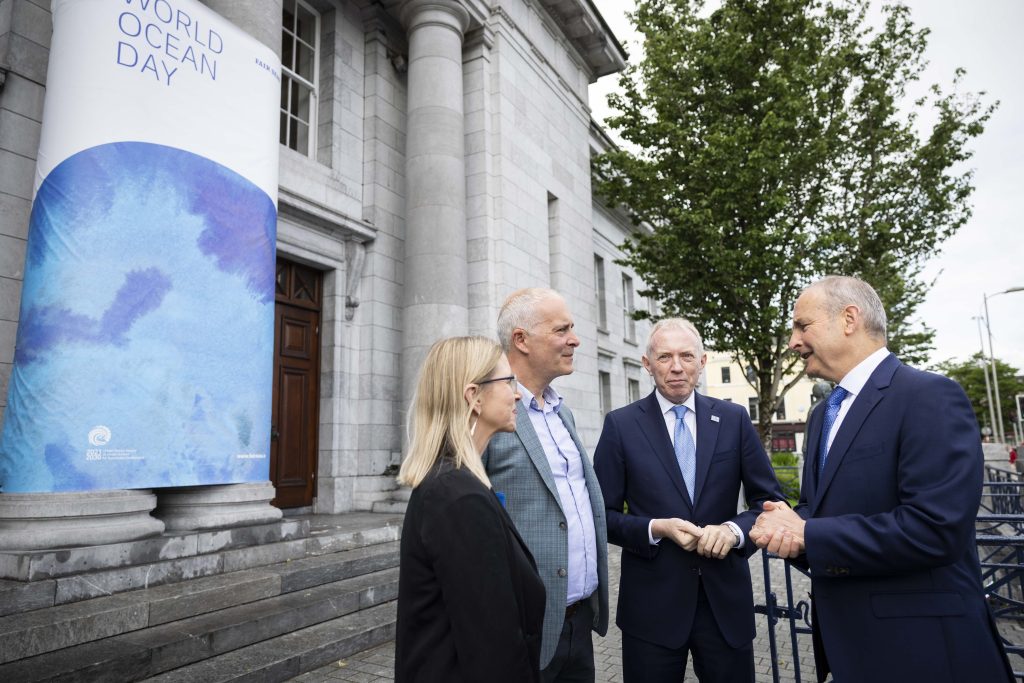
The opening session provided a clear reminder that Ireland is not starting from scratch. Around the world, countries are already demonstrating what works in marine protection. The challenge now is ensuring that Ireland learns from these examples and delivers a network of Marine Protected Areas that genuinely protects nature while supporting coastal communities.
From Designation to Delivery: Making Marine Protected Areas Effective (Session 2)
As Ireland begins the process of developing a national network of Marine Protected Areas (MPAs), one question becomes increasingly important: what separates effective MPAs from those that exist only on paper? Lessons from International Success Stories was the theme for this session. The second session of the Fair Seas World Ocean Week Conference explored this question through examples from around the world. Speakers shared experiences from Europe, the Azores, the Mediterranean and North America, offering practical insights into how marine protection can deliver real ecological results.
Belinda Bramley, highlighted the importance of stakeholder engagement from the earliest stages of MPA development. Successful marine protection depends on bringing communities, ocean users and decision-makers into the process rather than presenting them with predetermined outcomes. Belinda is the Co-founder Director of the Protected Areas Foundation and Stakeholder Engagement Co-Lead for MPA Europe Project
Adriano Quintela joined remotely due to storms in the Azores that cancelled his flight and discussed the Blue Azores initiative, which has become an internationally recognised example of collaborative marine conservation. The project demonstrates how ambitious protection targets can be combined with community participation, scientific evidence and long-term planning. Adriano is a Marine Spatial Planning Specialist at the Blue Azores & Oceano Azul Foundation.
Zafer Kizilkaya shared powerful examples of marine recovery in the Mediterranean, showing how strong protection and effective management can lead to the return of species and habitats that had experienced severe decline. A particularly inspiring aspect to Zafer’s work was the ground-up approach to conservation being led by communities and NGOs working together and how state support has been won for their work after seeing how effective their efforts have been. Equally encouraging is the huge increases in the incomes of artisanal fishing communities, notably a 300% in fishing incomes in Gokova Bay, Turkey, with much larger fish being reported by fishermen and women thanks to the management and enforcement of the Marine Protected Area. Zafer also discussed how his organisation, The Mediterranean Conservation Society, is working with over 30 Michelin star restaurants and culinary schools to find uses for invasive species.
Will McClintock, who also got stuck in the Azores en route to the conference, focused on the role of science, data and marine spatial planning in helping decision-makers identify where protection can achieve the greatest benefits. Will is a marine spatial planner and Director of the SeaSketch program at the National Centre for Ecological Analysis and Synthesis (NCEAS), University of California, Santa Barbara. SeaSketch is a participatory mapping platform for MPA planning. The tool allows stakeholders to express their views and values when it comes to protecting parts of the ocean and allows various versions created by stakeholders to be compared and fair compromises reached among them to conserve an area.
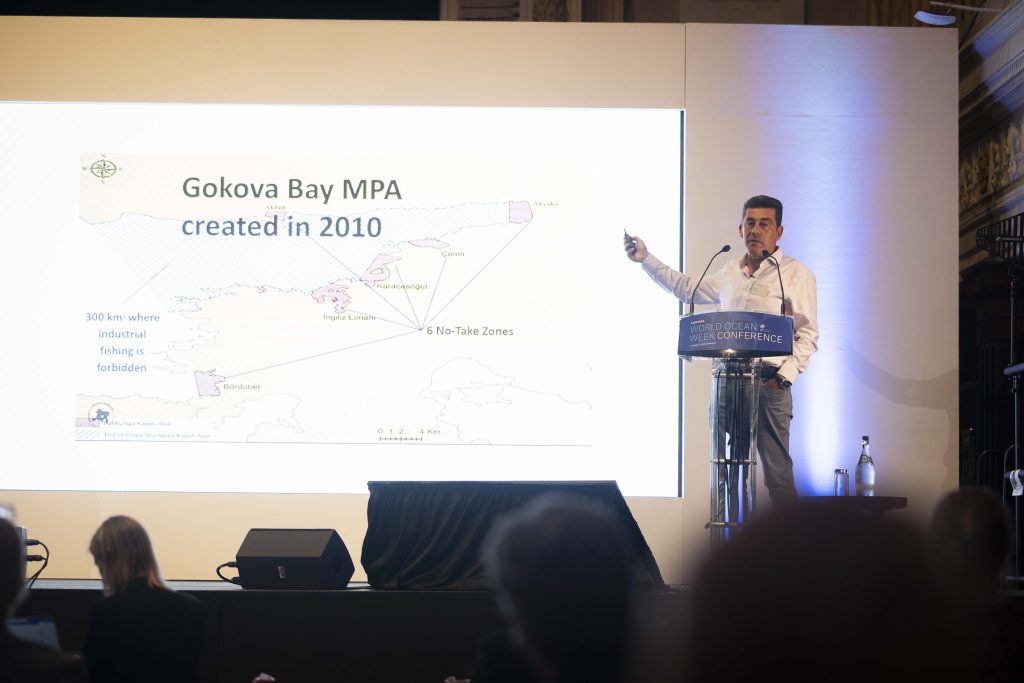
One of Will’s key take-home messages was that MPAs that are designed in this participatory approach reflect the values of ocean users and because of that when MPAs are created, you see less conflict and better buy-in and ultimately more success. Together, these examples reinforced a simple but important lesson for Ireland’s MPA process: designation is only the beginning.
For MPAs to succeed, they must have clear objectives, effective management plans, monitoring programmes, sufficient resources and community support. Without these foundations, protected areas risk failing to deliver the biodiversity benefits they were created to achieve.
As Ireland moves towards identifying and managing new MPAs, international best practice provides a valuable roadmap for ensuring that protection leads to genuine recovery in the ocean.
Stewardship, Governance, and Marine Protection (Session 3)
Protecting nature through partnership is key to long-term success and was the guiding principle behind this session. Marine protection is often discussed in terms of legislation, science and policy. But effective conservation ultimately depends on people.
That was the central theme of Session Three at the Fair Seas World Ocean Week Conference, which explored the role of stewardship, governance and collaboration in creating successful Marine Protected Areas.
The session opened with a keynote from acclaimed wildlife sound recordist and ornithologist Seán Ronayne. Through his work documenting Ireland’s natural soundscapes, Seán has highlighted both the richness of Ireland’s biodiversity and the urgency of protecting it. His contribution served as a reminder that conservation is about more than habitats and species lists. It is about safeguarding living ecosystems that support culture, identity and community wellbeing.
Speakers from across the marine sector then explored how stewardship can be translated into practical action.
Grace Carr of the Irish Wildlife Trust highlighted the role of civil society in advocating for stronger marine protection and ensuring that conservation objectives remain at the heart of decision-making. Grace clearly highlighted the failing in current ocean governance in Ireland with the latest government report showing 12 out of 14 marine habitats to be in bad condition, a figure which has more than doubled since the last reporting period.
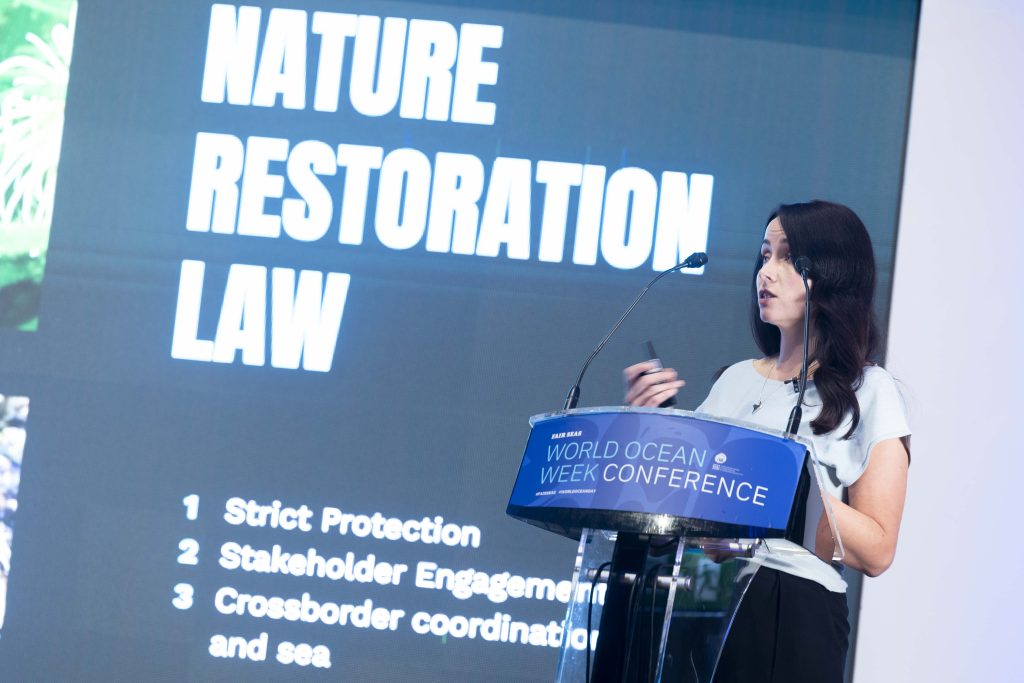
Oliver Ó Cadhla outlined the evolving policy framework being developed by the Government to support Ireland’s growing MPA network. Oliver gave an overview of the MPA Life Project, which is a government led project on Marine Protected Areas that is laying the foundation for Ireland’s network of MPAs. If the project meets it’s aims it would see a real change and more inclusive and interconnected approach to marine protection as has been seen in Ireland until now. We would encourage anyone interested to look back over this segment of the conference recording to learn the full detail of the MPA life project.
John Lynch of the Irish South and East Fish Producers Organisation brought an important perspective from the fishing sector, emphasising the need for collaboration and engagement with those whose livelihoods depend on the sea. John’s messages focused on ‘changing times, changing seas’ with the growing policy and regulatory frameworks surrounding modern day fishing as well as climate and environmental change. John also painted a clear picture of the history and culture of fishing in Irish waters. Wrapping up his section John ended with a clear message, that his organisation the Irish South & East Fish Producers Organisation is ready to work together in the identification and roll out of MPAs but caveated clearly that consultation alone is not enough and what he would like to see is a codesign and comanagement process.
Robert Walsh of Ulster Wildlife shared experiences from Northern Ireland, demonstrating how partnerships between communities, conservation organisations and government can strengthen marine management. Robert detailed the intense campaigning work that has been ongoing in the region for over 20 years and has led to the progress on MPAs in the waters off the North East coast of Ireland. The North of Ireland today has a staggering 38% of its waters protected but Robert laid out that gaps still remain as well as site specific pressures and that a lot of work is still ongoing to improve the health of their protected sites.
A key message emerged throughout the session: effective MPAs cannot be delivered by any single group acting alone. Collaboration is key.
Ireland’s forthcoming MPA programme will require cooperation between government agencies, scientists, environmental organisations, fishing industries, coastal communities and business. Building trust and ensuring meaningful participation will be just as important as ecological science in determining the success of marine protection efforts.
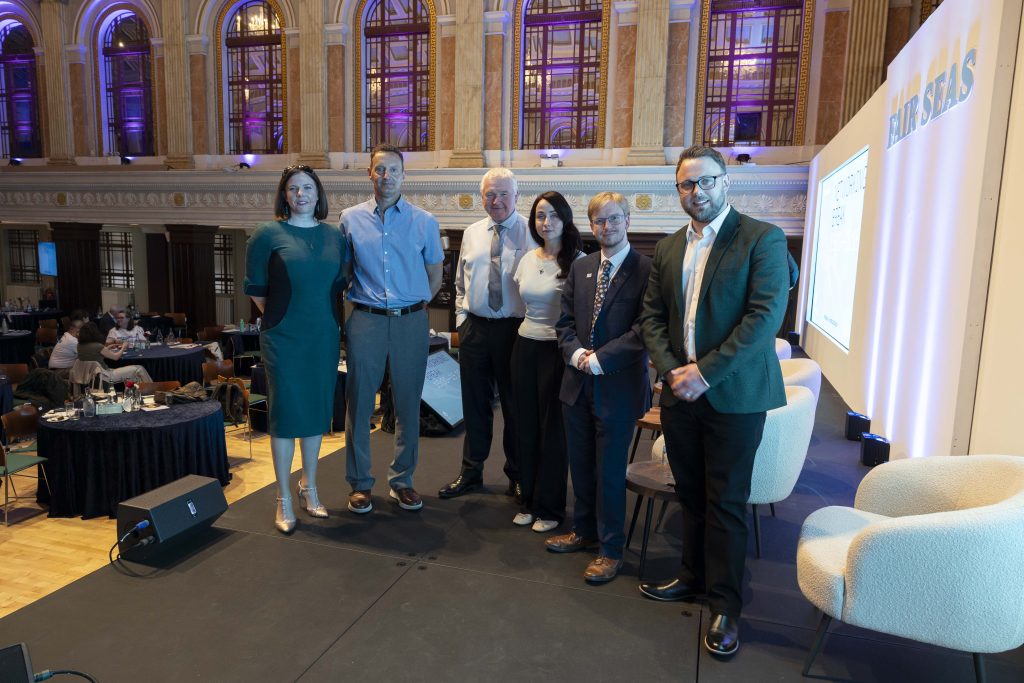
Shared Seas: Stakeholder Perspectives (Session 4)
The final session of the conference brought together voices from across Ireland’s marine sector to reflect on the opportunities and challenges ahead for Marine Protected Areas. The aim, building a common vision for Ireland’s ocean and finding common ground for marine protection
The discussion highlighted an important reality: many different groups depend on a healthy ocean, and each has a role to play in its future management. The panel included representatives from environmental advocacy, academia, renewable energy, marine innovation and tourism, creating a rich conversation about how marine protection can deliver benefits across society.
Speakers from this panel included;
- Karin Dubsky of Coastwatch Ireland spoke about the value of citizen engagement and public participation in environmental decision-making. Louise Overy highlighted the role of research and education in informing evidence-based conservation of angel sharks inTralee Bay.
- Patricia Comiskey of Tonn Nua wind farm with ESB, discussed the development of offshore renewable energy and the planning and responsible development they are engaged in.
- Máire Ní Einniú discussed the opportunities for innovation and sustainable blue economy development, while Brendan Curtin reflected on the importance of healthy marine ecosystems for tourism and local businesses. Máire Ní Éinniú is the Head of Nua Mara, Ireland’s Marine Innovation and Development Centre, a subsidiary of Údarás na Gaeltachta.
- Brendan Curtin is the owner of AquaTerra Boat Tours based on Valentia Island Co. Kerry.
- Louise Overy, Assistant lecturer in wildlife biology, Munster Technological University.
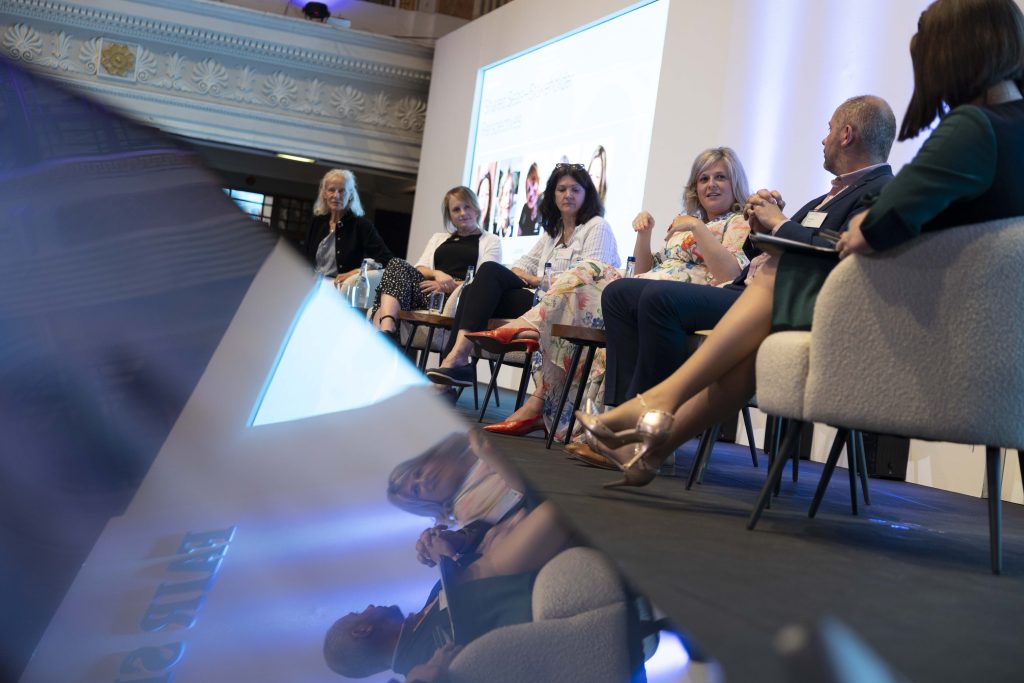
While perspectives varied, there was broad agreement on one key principle: healthy marine ecosystems underpin a wide range of environmental, social and economic benefits.
For Ireland’s MPA process, this is an important lesson. Marine Protected Areas should not be viewed solely as conservation tools. Well-designed and effectively managed MPAs can support biodiversity recovery, strengthen climate resilience, contribute to sustainable fisheries, enhance tourism opportunities and help safeguard the natural heritage that coastal communities depend upon. Máire made a clear point that jobs and people are also at risk along Ireland’s coast especially in gaeltacht regions and how well designed MPAs could offer hope but also could be perceived as a threat if designed top down.
As the conference concluded, the discussion reinforced the idea that successful marine protection is ultimately about finding common ground while also getting to work with where we are now, a point well made by Dr Micheál Ó Cinnéide to close out the day.
Ireland now has an opportunity to create a network of Marine Protected Areas that reflects both the ecological needs of the ocean and the aspirations of the people who depend on it. Achieving that balance will require collaboration, transparency and a shared commitment to securing a healthy ocean for future generations.
The Fair Seas World Ocean Week Conference 2026 was a huge success, and alongside the wonderful and dedicated speakers, the conversations and connections made among attendees were ultimately what made it.
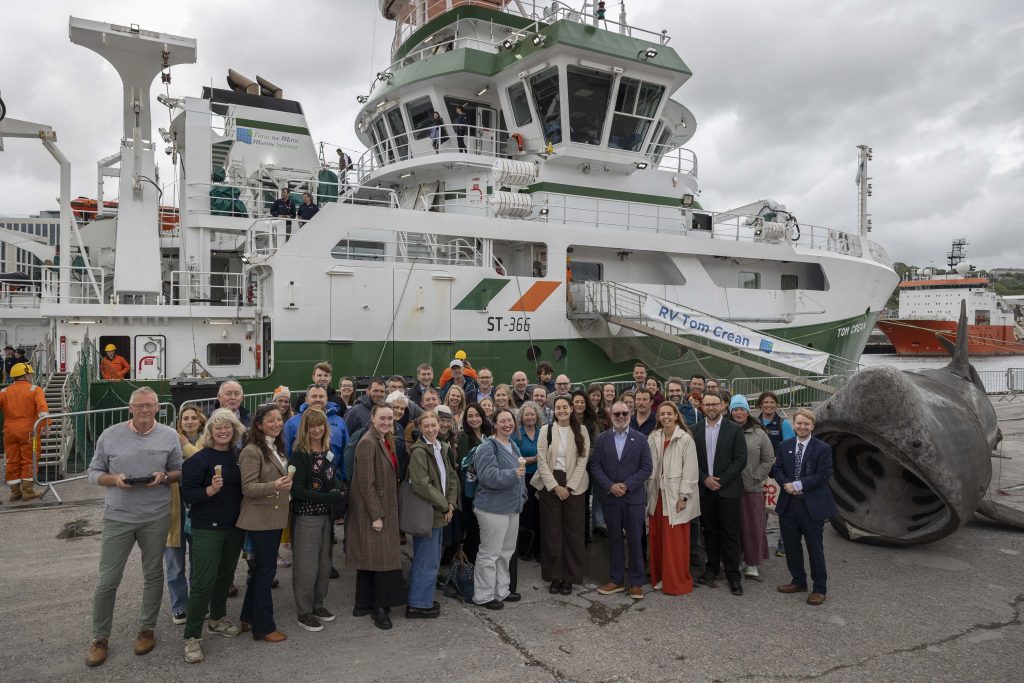
More information on speakers’ names, titles and themes is available on the official conference website.
This conference was a follow on from the first World Ocean Week Conference hosted by Fair Seas in 2023. A full recording of the 2023 conference is also available on YouTube.
Help us spread the word - please share!


